

TL;DR
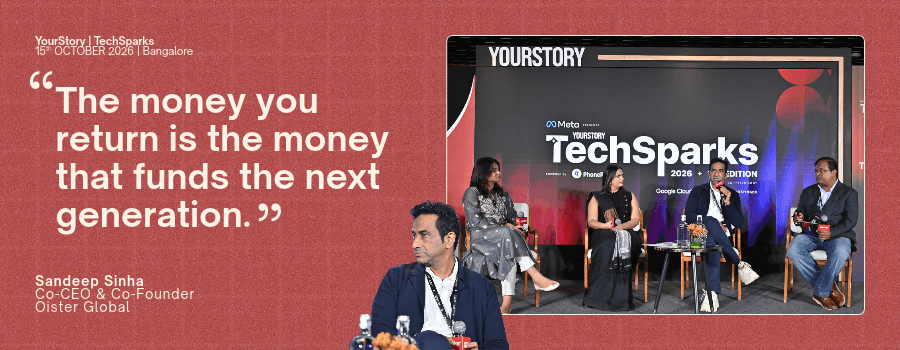
- The central message of the YourStory TechSparks panel “The New VC Rules: What Will the Next Capital Cycle Reward?” was clear, and Sandeep Sinha of Oister Global put it simply: the next cycle rewards founders who can raise capital, build lasting businesses and return capital.
- India’s equity AIFs show a pooled IRR of about 24%, well ahead of public markets. The next milestone is converting that strong performance into DPI.
- Capital is back and more focused: Indian tech raised $10.3B in the first nine months of 2026, up 7%, with bigger cheques going to stronger companies.
- IPOs remain the gold standard. Secondaries are the road to a stronger IPO, giving good companies time to become great in private.
- Founders who plan liquidity early, price for the exit and keep exit-ready cap tables will attract the next generation of capital.
Quick Answer
“Distributions are the new valuation” means that in India’s next capital cycle, the cash a startup returns to investors matters as much as the valuation it raises at. DPI now shapes which investors raise their next fund, and therefore how much capital, board patience and follow-on support reaches founders. Founders who build for exit readiness will be first in line for that capital.
What Does “Distributions Are the New Valuation” Mean?
Indian private markets are delivering. As Sandeep Sinha of Oister Global noted on the panel, Oister’s annual benchmarking report with Crisil shows India’s equity AIFs at a pooled IRR of about 24%, well ahead of public markets. As of March 2025, about one in four funds had already returned all of its investors’ capital.
The returns are real. The next chapter is about turning them into cash, on time. That is why DPI has become the new IRR: it is the metric that decides which managers raise their next fund, and capital will flow to the founders and funds who deliver it.
Capital Is Back, and It Is Smarter
The last few years taught India’s founders discipline. Those who built through the reset learned unit economics, efficiency and patience, and they are now the companies attracting capital.
In the first nine months of 2026, Indian tech raised $10.3 billion, up 7%. Investors are writing fewer, bigger cheques and backing companies that clear a higher bar. AI-native companies are setting new benchmarks for efficiency: Sarvam and Neysa became unicorns in under three years, and the average 2026 unicorn raised about $101 million to get there.
The lesson of the last cycle was to build a sustainable business. This cycle adds a second one: build a business that can return capital.
The IPO Is the Destination; Secondaries Are the Road
India’s public markets are one of the deepest pools of growth capital anywhere, and listing remains the gold standard for a great company. They are working: India saw 42 tech IPOs in 2025 and 29 in the first nine months of 2026, and the average time from first funding to IPO has come down to about 8.5 years.
Great companies often take longer. BlueStone, backed through Oister’s ACE fund, was founded in 2011 and listed in August 2025, fourteen years later. In deeptech, where Oister backs companies like Agnikul, the journey is longer still.
This is where secondaries come in, Sinha explained. A secondary gives a good company the time to become a great one in private. Early backers get paid along the way, long-term investors step in, and the founder can list when the business is ready. The result is a stronger listing, with a cleaner cap table and shareholders who want to be there. Secondaries don’t compete with IPOs; they build better ones.
Secondaries: India’s Growing Middle
India is now the world’s third-largest startup funding market, and AIF commitments have crossed ₹15 lakh crore. A mature funding ecosystem builds an equally mature exit environment, and secondaries are a central part of it.
| Metric | Global | India |
|---|---|---|
| Secondaries volume | Record $240B (2025), up 48% | About ₹37,700 crore (FY25), up 32% |
| Momentum | US VC secondaries (61B) now exceed VC-backed IPOs (59B) | H1 FY26 has almost matched all of FY25 |
| Deal size | — | Nearly 4x since FY20 |
Sources: Oister x Crisil benchmarking; global industry data.
| Exit route | What it offers |
|---|---|
| IPO | The gold standard, with access to deep public capital |
| Secondary | Liquidity for early backers while the company keeps building in private |
| M&A | A strategic outcome with the right acquirer |
| ESOP buyback | Real wealth for employees and a stronger equity culture |
Secondaries work alongside every other exit route. In 2025, India also saw 214 startup acquisitions worth $6.7 billion and $158 million of ESOP buybacks.
The Founder Playbook for the Next Cycle
Sinha shared five principles for any founder raising in this cycle:
- Know your investors’ clocks. Ask each VC about their fund vintage and when they need to return capital. That date shapes your board’s priorities as much as any term sheet.
- Put liquidity in the plan. Schedule ESOP liquidity windows and allow a measured secondary at each major round. Small, regular releases build confidence across the cap table.
- Price for the next exit, not the next headline. A realistic valuation makes every future transaction smoother for everyone at the table.
- Keep the cap table and governance exit-ready. Clean records, audited numbers and sensible transfer clauses let a secondary or acquisition close in weeks, not quarters.
- Build relationships with acquirers early. Know the 10–15 strategic buyers in your space. M&A is an outcome you prepare for.
A Shared Opportunity
Building India’s exit ecosystem is a shared opportunity. GPs can actively run continuation funds and portfolio sales alongside IPO exits. Regulators can unlock the next stage of growth by introducing a mechanism for mid-life fund liquidity; globally, GP-led deals already make up about 41% of secondary volume.
India has built a world-class funding ecosystem. The next milestone is building an equally strong exit ecosystem.




 Call Us