


Oister Global and Crisil Intelligence presented the annual No Ifs About AIFs private markets benchmarking report to the Hon'ble Finance Minister, Smt. Nirmala Sitharaman.
People in the photograph (left to right): Priti Arora (President & Business Head, Crisil Intelligence) Sneha Dadrwal (Chief Brand Officer and Investor Relations, Oister Global) Rohit Bhayana (Co-CEO & Co-Founder, Oister Global) Nirmala Sitharaman (Finance Minister of India) Sandeep Sinha (Co-CEO & Co-Founder, Oister Global) Himanshu Periwal (Chief Operating Officer, Oister Global)
What follows is a skimmable summary of our findings. The complete report explores the insights in depth.
The highlights. In brief.
Bringing transparency to scale domestic capital, deepening private markets as a resilient and durable pillar of India's economic expansion
At Oister, we believe long-term capital formation rests on trust built through data, discipline and repeatable outcomes.
This report is part of a body of work Oister and Crisil began three years ago with the aim of bringing greater transparency and trust to India's private markets.
The first edition, anchored in the 2023 benchmarking cycle, established a credible performance baseline at a time when private capital was expanding rapidly but lacked comparable, cash flow-aware measures.
The second edition deepened that work by examining outcomes stage by stage, addressing questions around durability and dispersion as the allocator base matured.
With the launch of the third edition in 2026, the initiative has matured alongside India's unlisted economy. India's private markets have reached a point where outcomes carry more weight than momentum.
This edition goes deeper into performance outcomes, liquidity, secondaries, dispersion, and persistence.
The fast brief on the third edition
India's AIF are Scaling Into a Core Allocation
- The AIF industry has reached critical scale: Cumulative commitments across Categories I, II and III stood at ~₹15.05 lakh crore as of Sept 2025.
- Growth remains structurally strong: AIF commitments have compounded at ~30.7% CAGR between FY21 and H1 FY26.
- Category I and II dominate capital formation: These categories alone have grown at ~27.9% CAGR, reflecting allocator preference for equity and growth strategies.
- The manager universe is expanding rapidly: India now has 1,600+ SEBI-registered AIFs, with nearly two-thirds launched since 2021.
- AIFs are becoming mainstream allocations: AIF share of managed investment AUM rose to ~6.9% by March 2025, up from ~1.4% in 2017.
- Domestic institutions are driving depth: Domestic investors now account for a majority share of capital in Category I and II AIFs.
- Policy and regulation are reinforcing confidence: Progressive SEBI reforms around benchmarking, valuation, governance and disclosure are accelerating institutional participation.
- The next leg of growth remains ahead: Large domestic pools such as EPFO and NPS remain under-allocated, leaving meaningful headroom for future scale.
Domestic Capital Is Stepping In And Staying In
- Domestic investors now anchor the market: Domestic participation in Category I & II AIFs rose to ~55.3% as of Sept '25, up from ~50.3% a year earlier.
- Capital inflows are accelerating, not episodic: Domestic investors added ~₹1.14 lakh crore into Category I & II AIFs over the last year alone.
- Institutions are increasingly counter-cyclical: While foreign flows moderated, domestic institutions continued allocating, reinforcing stability and long-term capital formation.
- Government-backed capital is meaningfully present: Public institutions and sovereign-backed entities have committed ₹24,000+ crore to AIFs, signalling policy-aligned confidence in the asset class.
- Allocator base is broadening: Participation from family offices, HNIs, insurers and banks is deepening, with EPFO and NPS representing the next leg of institutional scale.
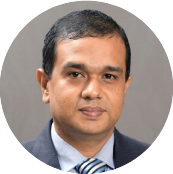
JIJU VIDYADHARAN
Intelligence, Crisil Limited
Alternative investment funds (AIFs) have become a key pillar of India's private market landscape in a little over a decade since their introduction.
Secondaries Are Becoming a Core Liquidity Channel
- Secondaries are scaling fast: Deal value reached ~₹377 billion in FY25, up ~32% year on year.
- Momentum is carrying into FY26: The first half of FY26 has already recorded ~₹361 billion in secondary transactions, nearly matching the full prior year.
- Deals are getting more institutional in size: Average deal size rose from ~₹2.28 billion in FY20 to ~₹8.39 billion in H1 FY26, a ~3.7x increase.
- Liquidity use-cases are broadening: Secondaries are increasingly enabling portfolio rebalancing, ESOP monetisation and structured early exits, not just end-of-fund liquidity.
- A repeatable supply pipeline is forming: ~201 companies, around ~52% of the cohort, moved from early-stage to growth rounds within ~2 to 5 years, creating natural secondary opportunities.
- Secondaries are strengthening outcomes: Growing liquidity depth is supporting capital recycling, reducing duration risk and improving realised-return visibility across cycles.

Performance Is Holding Up & Differentiation Is Clear
- Consistent alpha vs public markets: Across the last seven benchmarking cycles, equity AIFs delivered ~8.7% average alpha over the BSE Sensex TRI.
- Strong absolute returns: The aggregated equity benchmark recorded a ~24% pooled IRR, versus ~15% for public market equivalents (PME+).
- Early-stage funds continue to lead: Early-stage benchmarks delivered ~30.9% pooled IRR, generating ~10.1% alpha over the BSE 250 SmallCap TRI.
- Growth & late-stage funds remain resilient: Pooled IRR of ~23.8%, with ~8.0% alpha over the BSE 200 TRI, despite a tougher exit environment.
- Top-half managers meaningfully outperform: The top 50% of funds by IRR generated ~13.6% alpha, reinforcing the value of manager selection.
- Dispersion confirms maturity: Returns are no longer momentum-driven; outcomes increasingly reflect underwriting quality, discipline, and cycle positioning.
Capital Is Coming Back: DPI Shows a Maturing Market
- Real distributions are happening at scale: ~80% of benchmarked equity AIF schemes have already made distributions to investors (as of Mar'25).
- Meaningful capital return is underway: ~25% of schemes have crossed 1.0x DPI (full paid-in capital returned).
- Top managers are proving strong realisation capability: Top-quartile funds show ~2.0x+ DPI (i.e., strong realised multiples).
- Average realised multiples are building steadily: Among funds that have distributed, average DPI is 0.72x for the aggregated benchmark.
- Growth/later-stage is showing faster cash return: Among distributing funds, growth & late-stage average DPI is 0.84x (highest across the buckets shown).
- A large share has already returned half the capital: 42.25% of aggregated benchmark schemes have reached 0.5x DPI, signalling meaningful mid-cycle liquidity.
- Time-to-cash is visible, not theoretical: Schemes that reach 1.0x DPI have done so in ~7.2 years on average

India's private markets have reached a point where outcomes carry more weight than momentum.
Deal Sizes Are Moving Up the Quality Curve
- Larger tickets are becoming the norm: The share of deals above ₹500 million rose to ~30% in FY25, up from ~18% in FY15.
- Mid-sized deals are scaling meaningfully: ₹200-500 million transactions increased to ~19% of deal count, more than doubling over the past decade.
- Capital is concentrating in conviction bets: Deals above ₹500 million accounted for ~90% of total deal value in FY25
- Average deal sizes are rising alongside maturity: Larger, later-stage transactions now anchor overall market value, reflecting improved scale and governance.
- Investor behaviour is shifting from volume to value: Fewer but higher-quality deals are driving capital deployment outcomes.
Sector Exposure Is Broadening and Rebalancing
- Sector concentration is declining: The combined share of the top five sectors fell to ~66% in FY25 from ~86% in FY15, indicating diversification.
- Consumer and tech remain foundational: Consumer goods, services and related tech continue to lead by deal value, though with reduced dominance.
- Financial services are gaining share: Fintech and financial services doubled their value share to ~14% over the past decade.
- Healthcare is emerging as a core pillar: Healthcare and healthtech investments delivered ~22% CAGR in deal value, supported by exits and demand depth.
- Climate and sustainability themes are scaling: Climate, environment and renewables grew from ~0.3% to ~4.6% of deal value between FY15 and FY25.
- Capital is aligning with national priorities: Increased exposure to manufacturing, logistics, real estate tech and climate reflects structural, policy-backed growth themes.
About CRISIL
CRISIL is a leading, agile and innovative global analytics company driven by its mission of making markets function better. It is India's foremost provider of ratings, data, research, analytics and solutions with a strong track record of growth, culture of innovation, and global footprint.
It has delivered independent opinions, actionable insights, and efficient solutions to over 100,000 customers through businesses that operate from India, the US, the UK, Argentina, Poland, China, Hong Kong, UAE and Singapore.
It is majority owned by S&P Global Inc, a leading provider of transparent and independent ratings, benchmarks, analytics and data to the capital and commodity markets worldwide.

About Oister Global
Oister is India's Premier Alternative Assets Manager
We combine robust diligence, deep domain expertise, and an extensive network to create high-quality private market opportunities for our investors. With a digital-first approach, we ensure precision, transparency, and an unwavering focus on prioritizing our investors' interests at every step.
We manage proprietary funds, invest in PE/VC funds and secondary opportunities, and partner with CRISIL to produce the industry's leading annual benchmarking report on private equity and venture capital trends. With over 18 years of hands-on experience in private markets, our founding team deeply understands the ins and outs of this dynamic space. Oister bridges the gap by providing a comprehensive suite of curated, high-quality opportunities that empower qualified investors to participate meaningfully in private markets.
“If it's on Oister, it's a Pearl.” This guiding principle reflects our unwavering commitment to excellence and quality.



 Learn More